



What Is Rhinoplasty? What Are the Prices?
Rhinoplasty, or nose surgery as it is medically known, is a surgical procedure performed to improve the shape, size, or functional features of the nose. In addition to addressing aesthetic concerns, this operation aims to correct bone and cartilage deviations that cause breathing difficulties. Surgeons may reduce the nasal hump, reshape the nasal tip, or make the nostrils more compatible with facial features.
Today, this procedure is customized according to the patient’s needs using open rhinoplasty or closed rhinoplasty techniques. Modern methods minimize tissue trauma and help speed up the recovery process. A properly planned procedure can balance facial symmetry while significantly improving quality of life.
How Much Does Rhinoplasty Surgery Cost in TL?
Rhinoplasty surgery, also known as nose surgery, ranges between ₺35,000 and ₺150,000 in Turkey. The doctor’s experience, the location of the hospital, and the difficulty of the operation determine this wide price range.
How Much Is Rhinoplasty in 2026(Current List)
By 2026, rhinoplasty prices will range between an average of ₺45,000 and ₺360,000.
Why Is Rhinoplasty Performed?
Although rhinoplasty is often considered for aesthetic concerns, it can also be performed for functional reasons. Complaints such as nasal bone deviation, enlarged turbinates, deformity after trauma, deformity following a previous operation, or shortness of breath may accompany rhinoplasty. Some people come in saying, “I don’t want a change in shape, I just want to breathe,” but during the examination, it may be seen that internal nasal problems have also affected the external structure. Therefore, a good rhinoplasty plan evaluates the nose internally and externally together.
Rhinoplasty can also have a significant effect on a person’s self-confidence. However, the healthy approach here is not the expectation that “my life will completely change,” but rather the goal of “I want a balance that is more harmonious with my face.” When the nose becomes smaller, other parts of the face may begin to appear more prominent, which can sometimes surprise the person. Therefore, clearly discussing your expectations with your doctor is the key to satisfaction after surgery.
How Does Nose Structure Affect the Result?
The most commonly overlooked fact in rhinoplasty is this: not every nose is the same. Skin thickness, cartilage strength, bone structure, nasal tip support, and facial proportions determine the limits of the changes that can be made. Small details may be more visible with thin skin, while swelling may last longer with thick skin and definition of the nasal tip may take time. In noses with weak cartilage structure, simply “shaving” is not enough; supportive approaches are often required. Therefore, rhinoplasty is not a one-way procedure like sculpting a statue; it is a surgery that requires rebuilding while preserving the structure.
A different balance is also sought in male rhinoplasty. An excessively lifted nasal tip or excessive narrowing may create an artificial appearance on a male face. In female rhinoplasty, the columellar angle, nasal tip refinement, and nasal bridge line are planned more softly. However, everything is not based on a “female/male standard”; the person’s facial character and desired expression are the determining factors.
Difference Between Open Rhinoplasty and Closed Rhinoplasty
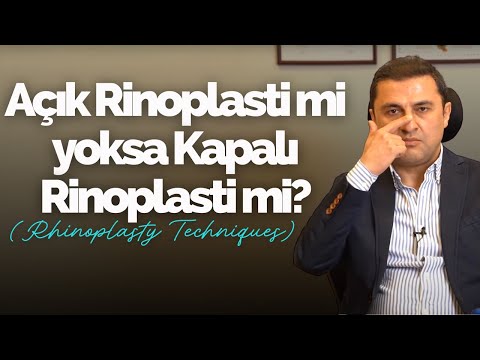
One of the most discussed topics in rhinoplasty is the question, “open or closed?” In open rhinoplasty, an incision is made in the small skin area between the nostrils (columella), allowing the surgeon to evaluate the nasal framework with a wider view. In closed rhinoplasty, the incisions are made inside the nose and there is no externally visible incision. Both methods have advantages; what matters is not the name of the method, but being able to perform the most controlled plan suitable for your nasal problem.
For some noses, the open approach provides more comfortable control for nasal tip work and asymmetry corrections. For other noses, the closed approach may be sufficient. Your doctor’s preference depends on the nasal anatomy and the targeted change. The critical point here is not the marketing statement of the technique, but the quality of the surgeon’s planning and application.
How Does the Rhinoplasty Process Progress?
The rhinoplasty journey begins with an examination. Your facial proportions are evaluated, an internal nasal examination is performed, and your needs are clarified. At this stage, planning based on photographs and discussing possible goals are very important. This is because someone who says, “I only want the hump removed,” may also have a drooping nasal tip or nasal deviation. If these details are not discussed, the feeling of “it did not turn out exactly as I wanted” may occur after surgery.
The operation is generally performed under general anesthesia. The duration of the procedure varies depending on the extent of the intervention. Some rhinoplasty procedures take less time, while more complex cases such as revision rhinoplasty may take longer. After surgery, a cast/splint may be placed over the nose; silicone nasal packs may sometimes be used inside the nose. Although the packing experience is more comfortable compared with older types of packing, it varies from person to person.
How Is Rhinoplasty Performed?
Rhinoplasty surgery is performed through the following steps:
- Examination and Planning: The surgeon evaluates the patient’s nasal structure, breathing condition, and aesthetic expectations. Personalized planning is performed by considering the nasal tip, hump, nostrils, and facial proportions.
- Anesthesia Application: The procedure is generally performed under general anesthesia. Some minor corrections can also be performed under local anesthesia.
- Incisions and Surgical Technique: Open rhinoplasty: A small incision is made in the area between the nostrils. The surgeon directly sees the nasal structure and performs the intervention.
- Closed rhinoplasty: Incisions are made inside the nostrils, leaving no external scar. It is less invasive but provides a limited field of view.
- Shaping: The nasal hump is filed down, the nasal tip is reshaped, and deviations are corrected. If necessary, support may be provided with a cartilage graft.
- Sutures and Cast Application: After surgery is completed, packing is placed inside the nose and a protective splint is placed outside. The sutures may be dissolvable.
Differences Between Male and Female Rhinoplasty
Male and female anatomy and aesthetic expectations are completely different from each other, and we create our designs with this awareness. In women, a slightly curved nasal bridge and a slightly more elevated angle between the nasal tip and lip (95-100 degrees) provide a feminine and elegant appearance. However, when this curve is exaggerated, the result moves away from a natural appearance, so we establish the balance very carefully.
In men, a straight nasal bridge and a 90-degree angle between the nasal tip and the lip are important for maintaining a masculine expression. The male nose should not be reduced; instead, it should be structured to harmonize with the strong features of the face. A scooped or excessively lifted male nose softens the facial expression and creates an unwanted appearance. We perform gender-specific planning to achieve results that match the person’s character.
Does Rhinoplasty Look Natural?
Perhaps this is the most frequently asked question. The fear of “Will it be obvious?” keeps many people away from surgery for years. Both the surgeon’s approach and your preferences are determining factors here. If you show excessively lifted, highly refined noses you have seen in photographs as examples, the result will be shaped accordingly. But when you say, “I want a nose that suits my face, looks natural, and does not stand out too much,” the planning becomes completely different.
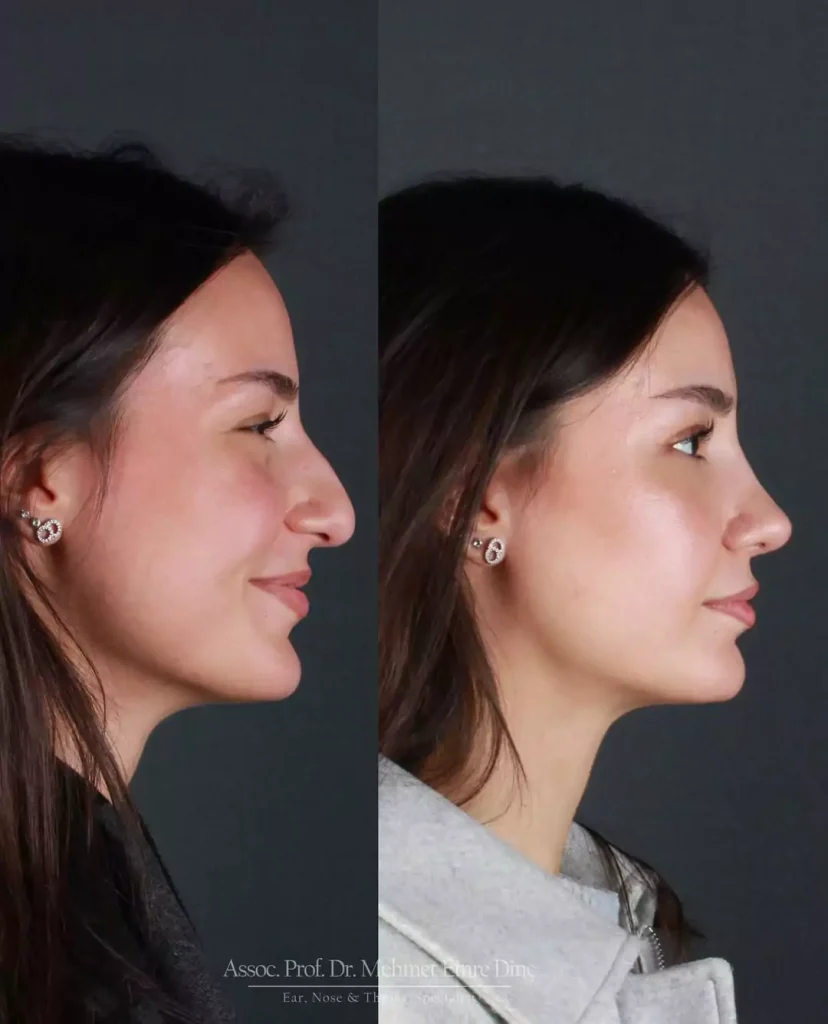
A natural result is generally understood in the following way: People do not immediately say, “Your nose looks beautiful,” but instead make more general comments such as, “Your face looks much more open, you look different, what did you have done?” In other words, the nose stops being the star on its own and becomes a part that completes the face. Especially in patients with thick skin, it should also be remembered that excessive reduction is technically not possible. Soft, balanced changes look much more realistic with this type of skin.
Does Rhinoplasty Also Improve Breathing?
If there are structural problems inside your nose that impair breathing, such as deviation, tissue enlargement, or collapse, these can also be treated together with the aesthetic procedure. In such cases, the aim of the operation is both to improve the external appearance and open the airway. In other words, the change can be felt not only when looking in the mirror but also while sleeping at night, climbing stairs, or exercising.
However, there is no rule stating that every aesthetic nose surgery will automatically solve breathing problems. Some patients do not already have a serious breathing problem, so only the external shape is treated. In others, additional factors such as previous trauma, allergies, or smoking also affect breathing quality. Therefore, instead of thinking, “I had rhinoplasty, so I will never have breathing problems again,” the best approach is to discuss the details of your internal nasal structure with your surgeon from the beginning and plan accordingly.
How Many Years Does Rhinoplasty Last?
It is generally a lifelong permanent procedure. Since surgical shape changes directly involve the bone and cartilage structure of the nose, they provide permanent results. Once the nose has fully healed after surgery, the new form obtained is maintained for many years.
However, the nose is not completely independent of the aging process. Over time, reduced skin elasticity or natural changes in facial structure may very slightly affect the result of rhinoplasty. These changes generally do not reach a level that disrupts the aesthetic result. When the procedure is performed with the correct technique and in accordance with the facial structure, a long-term and balanced appearance is achieved.
Are There Risks of Rhinoplasty?
Yes, rhinoplasty surgery has certain risks, as with every surgical procedure. The most common risks include infection, bleeding, complications related to anesthesia, and changes in shape during the healing process.
Functional problems such as breathing difficulties or drooping of the nasal tip may also occur. The surgeon’s experience and use of the correct technique minimize these risks. A detailed preoperative examination and proper planning are very important. Possible risks should be discussed openly with the doctor before undergoing rhinoplasty.
In Which Cases Should Rhinoplasty Be Performed?
Rhinoplasty should be performed when correction of the nasal structure is required due to aesthetic concerns or health problems. Difficulty breathing, deviation (nasal curvature), post-traumatic deformity, and congenital structural abnormalities are among the most common reasons.
Rhinoplasty may also be preferred when the size, shape, or symmetry of the nose is incompatible with the person’s facial structure. Rhinoplasty is an effective solution for both improving appearance and resolving functional problems. Proper patient selection and choosing an expert surgeon are important for successful results. Professional evaluation is essential for procedures performed for aesthetic and health purposes.
Is Revision Rhinoplasty a Difficult Process?
We call the corrective surgeries we perform on patients who have previously undergone rhinoplasty but have not achieved the aesthetic or functional result they wanted revision rhinoplasty. These operations are technically more extensive and require greater care compared with the first surgery. Internal tissue adhesions, reduced cartilage reserves, and altered anatomy require experience. However, we successfully manage these difficult cases and correct the conditions that make our patients unhappy.
In revision surgeries, the cartilage inside the nose may sometimes be insufficient. In this case, we reconstruct the nasal framework by taking your own tissue from behind the ear or the rib area. This procedure should not be frightening; since it is the body’s own tissue, there is no compatibility problem and it provides a permanent solution. Our aim is to eliminate the disappointment experienced by our patient and help them achieve the best possible result.
Things to Know Before Rhinoplasty
There are certain things you should know before undergoing aesthetic surgery. It is important to inform us whether you have any illness or complaint, which medications you use, and whether you have any allergies.
Medications or foods that may affect blood flow should be discontinued 1 week before. Smoking should be stopped 2 weeks before and alcohol consumption 1 week before. If your doctor considers it appropriate, you may undergo surgery during your menstrual period.

On the day of surgery, you must arrive at the hospital after the fasting period communicated to you (generally 6-8 hours on that day, you must arrive at the hospital after the fasting period communicated to you (generally this fasting period is determined as 6-8 hours). It is recommended to take a warm shower the night before surgery.
You must remove your metal jewelry and nail polish. Men need to shave their beard, and makeup should not be worn when coming for surgery. We explain the things you need to know before surgery in detail.
How Long Does Rhinoplasty Take?
The operation generally takes between 1 and 4 hours. This duration may vary depending on the complexity of the rhinoplasty operation, the patient’s nasal structure, and the desired result.
It may include various procedures such as correcting the septum, correcting the nasal tip or nostrils, and shaping the nasal bone. One or more of these procedures may be performed depending on the needs and wishes of the person undergoing surgery.
The operation is performed under general anesthesia, and the patient’s recovery usually takes several weeks. However, full recovery and understanding the results may take several months. Postoperative bruising, swelling, and nasal bandages affect the healing process. Following the doctor’s recommendations during the postoperative period is very important for maximizing the healing process.
How Should You Prepare Before the Procedure?
Let’s say you have decided to undergo rhinoplasty; the actual process really begins before the day of surgery. The better this preparation period is managed, the more comfortable the surgery and the period afterward will be. To see the answer to this question more clearly, it may be useful to list a few basic points:
- First, speak openly with your surgeon: Clearly explain what bothers you the most, which angles you dislike in photographs, what kind of result you expect, and everything else.
- Tell your surgeon about all medications, supplements, and chronic conditions you have without hiding anything; blood thinners, some painkillers, and even herbal products may be important.
- Reduce smoking as much as possible in the days before surgery; ideally, you should quit because it directly affects both wound healing and breathing.
- Complete preliminary preparations such as blood tests and the anesthesia examination on time; do not leave them until the last day so that the plans are not disrupted.
- It is better not to be alone on the first night after the operation; arrange in advance for a relative or friend who can stay with you.
- Try to arrange a few days of leave or a flexible schedule for returning to work/school during the recovery period; this way, you will not have to rush around with swelling and bruising on your face.
These preparations, which may seem small, noticeably reduce the stress you experience on the morning of surgery.
How Should You Eat After Rhinoplasty Surgery?
Following a healthy and balanced diet during the postoperative period supports the body’s healing process and reduces the risk of infection. During the first few days, it is important to consume light and easy-to-eat foods.
Drinking plenty of water is very important for maintaining the body’s hydration level and supporting the healing process. Water helps the body eliminate toxins and speeds up tissue healing. Make sure to drink at least eight glasses of water per day. Avoiding caffeinated and alcoholic beverages may cause the body to become dehydrated.
Protein is vital for tissue healing and repair. Consumption of protein-rich foods should include foods such as chicken, fish, eggs, legumes, and dairy products. Foods rich in vitamins and minerals should also be included in your diet. Vitamin C especially speeds up wound healing by supporting collagen production.
Foods containing vitamin C include oranges, strawberries, kiwi, broccoli, and red peppers. Fruits and vegetables rich in antioxidants also strengthen the immune system and support the healing process.
How Can I See What My Nose Will Look Like After Surgery?
You can see in advance what kind of nose you may have after surgery through digital 3D simulations. This technology provides realistic possible results by creating a nose model suitable for the patient’s facial features. Before the procedure, the surgeon evaluates expectations using these images and makes the most suitable plan.
Simulations do not guarantee exact results, but they help you form an idea. This allows a healthier decision to be made from both aesthetic and functional perspectives. By consulting an experienced surgeon, you can learn the technical details and review your personalized nose design in advance.
What Should You Pay Attention to After Rhinoplasty?
There are certain factors that should be considered to ensure that the recovery process after nose surgery is completed smoothly and quickly. My professional team and I explain in detail what you should pay attention to after rhinoplasty.
- You can generally return to your daily activities after 3-4 days.
- From the second day onward, you can take a warm shower without getting the nasal cast and tapes wet.
- From the second week onward, you can perform light exercises and start walking. However, since sports that require physical activity may cause bleeding in your nose, it is appropriate to perform them after the 1st month.
- To prevent edema, you should avoid the sauna, Turkish bath, solarium, sunbathing, steam bath, sea, and swimming pool for 1 month. During the first 4-6 months, it is important to avoid activities that may cause trauma to your nose, such as diving into water.
- To prevent sunburn, you should stay away from the sun for at least 2 months or wear a hat. It is also recommended to apply SPF 50 cream to your face to protect the skin from the sun.
- Using mouthwash solutions from the first day will be helpful for oral hygiene. From the 2nd day onward, you can brush your teeth using a soft toothbrush.
- It is recommended to change the dressing under the nostrils until the bleeding stops.
- Perform the dressing 4-5 times a day as explained to you using seawater spray, hydrogen peroxide, and antibiotic cream. With this dressing, crusting inside the nose will be minimal and the airways inside the silicone splints will remain open.
- Sleep with 2 pillows with your head elevated for the first 48 hours
- Applying an ice pack to the eyes during the first 48 hours helps reduce swelling.
- Drinking plenty of fluids is recommended
- Avoid blowing your nose for two weeks after surgery.
- If you need to sneeze, it is better to sneeze with your mouth open for two weeks after surgery.
- Avoid lifting heavy objects for two weeks
- Driving is not recommended during the first two weeks after surgery.
- Massage performed after rhinoplasty surgery activates the lymphatic system in the face, reducing edema and therefore speeding up recovery. The period when massage is most effective is the first 6 months after surgery. Massaging for 20 minutes a day in front of a mirror, more gently during the first 3 weeks and more firmly afterward, greatly helps the nose reshape and settle.
- It is recommended to wear contact lenses from the third day after surgery.
- After aesthetic surgery, reading glasses or lightweight rimless glasses can be worn from the 2nd month, while thick-framed sunglasses can be worn after the 3rd month. If you need to wear glasses during the first 2 months, we give you the nasal cast after removing it. You can wear your glasses over this cast.
Why Is Cheap Rhinoplasty a Risk That Should Not Be Taken?
Choosing cheap rhinoplasty should be avoided because it can lead to significant health problems and unwanted results. Cheap aesthetic operations may be performed using low-quality materials or by surgeons who are not specialists. This increases the possibility of postoperative complications and aesthetically unsatisfactory results.
In addition, the follow-up and care processes of cheap operations may often be inadequate, which can lead to long-term health problems. Safety and quality should come before cost in aesthetic surgical procedures.
Rhinoplasty Prices 2026
Current rhinoplasty prices generally range between ₺100,000 and ₺250,000. This price range varies depending on the scope of the surgery.
Some doctors may charge higher fees for more extensive corrections or revision procedures; in this case, the cost may reach up to ₺300,000.
| Procedure | Price | For Whom |
|---|---|---|
| Primary Rhinoplasty (First Rhinoplasty) | ₺180,000 | Patients undergoing rhinoplasty for the first time |
| Closed Rhinoplasty | ₺250,000 | Those who do not want the incision to be visible externally |
| Open Rhinoplasty | ₺250,000 | Those who require detailed nasal tip and structural work |

